Poster Art Prints: A Simple Guide to Choosing and Displaying Them
Poster art prints are an easy way to bring colour, character and personality into a room. From bold graphic designs and film-inspired artwork to illustrations, photography and abstract compositions, there is a print to suit almost every taste and space. Whether you are starting a collection or looking for one striking piece, a little thought about style, size and presentation can help you make the most of your artwork.
What makes a poster art print?
A poster art print is a reproduced image designed to be displayed on a wall. It might be a reproduction of an original artwork, a contemporary illustration or a design created specifically for print. Posters are available in a wide range of formats, from affordable unframed paper prints to premium editions on heavier stock.
Print quality can vary. Paper weight, surface finish and printing method all affect how a poster looks and feels. A matte finish can give colours a softer appearance and reduce reflections, while a gloss finish may make colours look brighter. For a more textured or substantial feel, look for prints on heavyweight or fine-art paper.
Choose artwork that suits your space
Start by considering where the print will hang. The colours and subject can complement existing furniture, textiles and wall colours, or provide a deliberate contrast. A vivid print can add energy to a neutral room, while a quieter design may create a more relaxed atmosphere.
Think about the mood you want to create, too. Landscapes and botanical illustrations can feel calming; geometric designs can give a room a contemporary edge; and playful or nostalgic images can add a personal touch. Most importantly, choose artwork you enjoy looking at. A print does not need to match every detail of a room to feel at home there.
Get the size right
A print should feel balanced in relation to the wall and the furniture around it. A small poster can look lost above a large sofa, while an oversized piece may overwhelm a narrow wall. Before buying, measure the available space and check the print dimensions. You can mark out the intended size with paper or masking tape to get a better sense of how it will look.
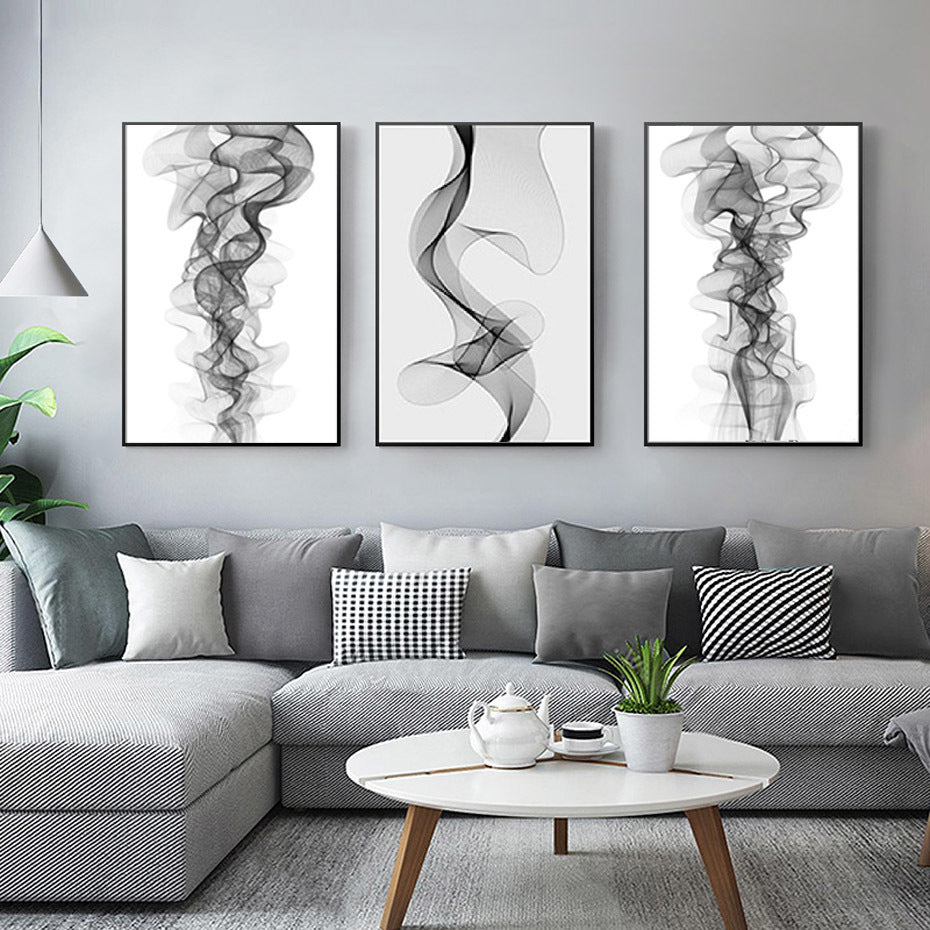
One large print can make a strong focal point. Alternatively, a group of smaller prints can form a gallery wall. For a tidy arrangement, keep the spacing between frames consistent and try laying out the composition on the floor before hanging anything. Combining different sizes can work well, particularly when the prints share a colour palette, subject or framing style.
Framing and display
A frame can protect a print and help it feel more finished. Simple black, white or natural wood frames suit many styles, while a coloured frame can make a more distinctive statement. A mount—the border between the print and the frame—can add breathing space around the artwork and make a smaller image feel more prominent.
Check the print dimensions before choosing a frame, and consider whether you want the artwork to sit behind glass or acrylic. Glazing helps protect the print from dust and handling, but it can create reflections. If the artwork is valuable or especially important to you, ask a professional framer about suitable materials and protection.
For a casual look, poster hangers or magnetic wooden rails offer an alternative to traditional frames. Whatever display method you choose, make sure it supports the print securely and is suitable for its size and weight.
Care for your prints
To help keep a poster looking its best, avoid placing it in direct sunlight, where colours may fade over time. Keep it away from damp areas and sources of heat, and handle the paper with clean, dry hands. If you are storing a print, use a protective sleeve or archival-quality folder and keep it flat where possible.
Make your walls your own
Poster art prints offer an accessible way to express your interests and refresh your home. A favourite illustration, an atmospheric photograph or a striking graphic design can turn an empty wall into a more personal part of your space. Choose artwork that speaks to you, give it room to shine and display it in a way that suits your home.
Top 9 Tips for Selecting and Displaying Poster Art Prints in Your Home
- Choose a print that suits your room’s colour scheme.
- Check the print size before you buy.
- Use a frame to protect and finish the artwork.
- Pick archival paper for lasting colour.
- Avoid hanging prints in direct sunlight.
- Try a gallery wall for a playful display.
- Leave space around each print when framing.
- Match the frame to the artwork’s style.
- Use removable strips to avoid wall damage.
Choose a print that suits your room’s colour scheme.
Choose a print that complements your room’s colour scheme to create a sense of balance and cohesion. You could pick out a shade already present in your furnishings or accessories, or use contrasting colours to make the artwork stand out as a focal point. There’s no need to match every colour exactly: a shared tone or complementary palette can help the print feel at home while still adding character to the space.
Check the print size before you buy.
Check the print size before you buy to make sure it will suit the space you have in mind. Measure the wall and consider how the artwork will look alongside nearby furniture; a small print may feel lost above a large sofa, while an oversized one could overwhelm a narrow wall. If you’re unsure, mark out the dimensions with paper or masking tape to visualise the fit.
Use a frame to protect and finish the artwork.
A frame helps protect your poster art print from dust, handling and accidental damage, while giving it a polished, finished look. Choose a frame that complements both the artwork and your room, and consider adding a mount to create space around the image. For extra protection, keep the print out of direct sunlight and ask a professional framer about suitable glazing and materials.
Pick archival paper for lasting colour.
For poster art prints that keep their colour over time, choose archival paper. It is designed to resist yellowing and deterioration, helping the artwork stay vibrant for longer. Keep the print out of direct sunlight as well, since even archival paper cannot prevent fading entirely.
Avoid hanging prints in direct sunlight.
Avoid hanging poster art prints in direct sunlight, as prolonged exposure to UV rays can cause colours to fade and paper to deteriorate. Choose a shaded wall, or use UV-protective glazing to help preserve your print.
Try a gallery wall for a playful display.
Try a gallery wall for a playful display by bringing together poster art prints in different sizes, colours and styles. Choose a shared theme or colour palette to make the arrangement feel cohesive, then vary the layout for a more relaxed, personal look. Before hanging your prints, arrange them on the floor to find a composition you love and keep the spacing between them fairly consistent.
Leave space around each print when framing.
Leaving space around each print when framing gives the artwork room to breathe and helps it stand out. A mount, or a generous gap between prints in a display, can make the arrangement feel calmer and more considered, while preventing nearby colours and details from competing for attention.
Match the frame to the artwork’s style.
Choose a frame that complements the style of the artwork rather than competing with it. A simple black or natural wood frame can suit minimalist prints, while ornate frames may enhance classical or vintage designs. For bold, contemporary artwork, a clean frame in a contrasting colour can add definition. If you are unsure, keep the frame understated so the print remains the focus.
Use removable strips to avoid wall damage.
Removable hanging strips are a handy way to display poster art prints without putting nails or screws into the wall. Choose strips rated for the weight of your frame or print, and follow the instructions carefully: clean and dry the surface, press the strips firmly into place, and allow the recommended setting time before hanging. They can usually be removed cleanly, but check that they are suitable for your wall finish and test discreetly first, as paint or delicate wallpaper may still be affected.