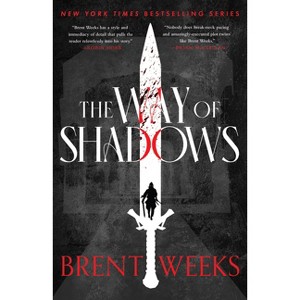
The Night Angel Trilogy: A Dark Fantasy of Assassins, Magic and Redemption
Brent Weeks’s Night Angel trilogy is a fast-paced dark fantasy series about the making of an assassin—and the cost of becoming one. Set in a world of warring kingdoms, dangerous magic and political intrigue, the books follow a street child whose attempt to escape poverty draws him into a life of violence and shifting loyalties.
The trilogy comprises The Way of Shadows, Shadow’s Edge and Beyond the Shadows. Together, the novels take their central character, Kylar Stern, from the backstreets of Cenaria to conflicts with consequences for the fate of an entire kingdom.
From street child to wetboy
Kylar begins life as Azoth, a boy struggling to survive among Cenaria’s poorest inhabitants. He hopes to leave that life behind by becoming the apprentice of Durzo Blint, a feared assassin known as a wetboy. In the world of the trilogy, wetboys are more than hired killers: their magical abilities can make them exceptionally difficult to stop.
Training under Durzo offers Kylar a chance at power and security, but it also brings a painful question: can he become a killer without losing the parts of himself that make him human? His relationship with his mentor, and with the people he wants to protect, gives the story an emotional centre amid its battles and schemes.
A kingdom on the brink
The personal story unfolds against a backdrop of political upheaval. Cenaria is threatened by the expansionist forces of Khalidor, while rival factions compete for influence within the kingdom. Assassinations, shifting alliances and struggles over the throne make the political landscape as perilous as the streets where Kylar grew up.
Magic adds another layer to the conflict. Some characters wield the Talent, a power that can be used in different ways, while the mysterious black ka’kari becomes closely connected to Kylar’s journey. These elements help give the series its distinctive blend of fantasy adventure and assassin fiction.
Darkness, loyalty and the possibility of change
The trilogy is often brutal, and its world offers few easy choices. Its characters face poverty, prejudice, betrayal and the consequences of violence. Yet the books are not only concerned with how people are shaped by harsh circumstances. They also ask whether a person can change, what redemption might demand, and how far someone should go to protect those they love.
Kylar’s struggle is especially compelling because his talents and his conscience pull him in different directions. The skills that help him survive can also draw him towards the very cruelty he hopes to escape. Across the trilogy, his choices test the boundaries between duty, justice and vengeance.
A sweeping fantasy with a quick pace
Weeks combines close character drama with large-scale action. The story moves between intimate relationships and events that affect whole nations, with assassinations, magical confrontations and political manoeuvring driving the plot. The result is a series suited to readers who enjoy dark fantasy with a strong narrative momentum and a central character forced to make difficult moral decisions.
The Night Angel trilogy begins with one boy’s attempt to survive and grows into a story about power, loyalty and the possibility of becoming something more than the life into which one was born. For readers drawn to morally complex heroes and high-stakes fantasy, Kylar Stern’s journey offers a memorable route through a dangerous world.
Exploring the Night Angel Trilogy: A Fast-Paced Tale of Assassins, Magic, and Redemption
- Fast-paced, gripping storytelling
- A compelling assassin protagonist
- Rich world-building and magic
- Intriguing political conflicts
- Memorable friendships and rivalries
- Themes of loyalty and redemption
Seven Drawbacks of the Night Angel Trilogy: A Critical Overview
- Graphic violence may not suit every reader.
- The prose can feel uneven.
- Some characters are lightly developed.
- The female characters can feel underwritten.
- The plot relies on familiar fantasy tropes.
- The pacing can be rushed.
- The ending may feel overly convenient.
Fast-paced, gripping storytelling
The Night Angel trilogy keeps the pages turning with fast-paced, gripping storytelling. Brent Weeks moves briskly between assassinations, political schemes and sudden twists, while Kylar Stern’s personal struggles give the action an emotional edge. Each revelation raises the stakes, making it easy to become absorbed in the story and eager to discover what happens next.
A compelling assassin protagonist
Kylar Stern is a compelling assassin protagonist because his lethal skills are constantly at odds with his conscience and desire to protect others. His journey from a vulnerable street child to a feared wetboy is not simply a rise to power: it forces him to confront the price of violence, the influence of his mentor and the possibility of choosing a different path. This tension makes Kylar’s character engaging, as readers see both the danger he represents and the humanity he struggles to hold on to.
Rich world-building and magic
One of the Night Angel trilogy’s greatest strengths is its rich world-building and distinctive magic. Brent Weeks creates a vivid realm of rival kingdoms, political intrigue and dangerous city streets, where magic is woven into both everyday life and the struggle for power. From the abilities of the wetboys to the mysterious ka’kari, each magical element adds depth to the setting and raises the stakes of Kylar’s journey.
Intriguing political conflicts
The Night Angel trilogy’s political conflicts add depth and tension to its dark fantasy world. As rival factions compete for power and Cenaria faces threats from beyond its borders, alliances shift, loyalties are tested and even a single assassination can alter the kingdom’s future. These struggles are closely tied to the characters’ personal choices, making the politics feel consequential rather than simply background to the action.
Memorable friendships and rivalries
One of the Night Angel trilogy’s strengths is its memorable friendships and rivalries. Kylar’s relationships—with his demanding mentor, Durzo Blint, and the companions he hopes to protect—give the story emotional depth, while his clashes with powerful enemies keep the tension high. These bonds are shaped by loyalty, mistrust and difficult choices, making the characters’ connections feel as consequential as the battles they face.
Themes of loyalty and redemption
One of the trilogy’s strengths is its exploration of loyalty and redemption. As Kylar struggles with his past and the violence of his chosen path, his bonds with friends, mentors and loved ones test what he is willing to sacrifice—and what he hopes to become. The story suggests that redemption is not easily won: it depends on confronting past choices and accepting their consequences. This gives Kylar’s journey emotional depth, making his efforts to protect others feel as important as the battles he fights.
Graphic violence may not suit every reader.
The Night Angel trilogy contains frequent, graphic violence, including brutal fights and disturbing scenes that can be difficult to read. While this grimness reflects the dangers of its fantasy world, it may not suit readers who prefer a lighter tone or less explicit depictions of violence.
The prose can feel uneven.
One criticism of The Night Angel trilogy is that the prose can feel uneven. At times, the writing is direct and brisk, helping the action move quickly; elsewhere, shifts in tone or pacing can make the storytelling feel less polished. Readers who value consistently refined prose may find this distracting, although others may appreciate the straightforward style and momentum.
Some characters are lightly developed.
One weakness of The Night Angel trilogy is that some characters receive only limited development. With a large cast and a plot that moves quickly between assassinations, political conflicts and magical battles, certain supporting characters can feel more like they serve the story than fully formed people with independent motivations. Readers may find that they want more time to understand their backgrounds and relationships, particularly when their choices have a significant impact on the plot.
The female characters can feel underwritten.
One criticism of the Night Angel trilogy is that some of its female characters can feel underwritten. Although they play important roles in the plot, their motivations and inner lives are not always explored as fully as those of the male characters, particularly Kylar and Durzo. This can make some relationships feel more focused on how they affect the central hero than on the women’s own perspectives and ambitions.
The plot relies on familiar fantasy tropes.
One drawback of the Night Angel trilogy is its reliance on familiar fantasy tropes, including the orphaned hero, the shadowy assassin mentor and the struggle to save a kingdom from a powerful enemy. Readers well versed in the genre may find some developments predictable, and certain characters or conflicts can feel recognisable rather than wholly original. Although Brent Weeks adds plenty of action, magic and moral complexity, the story’s familiar foundations may make it less surprising for seasoned fantasy readers.
The pacing can be rushed.
One drawback of the Night Angel trilogy is its sometimes rushed pacing. Major events, character decisions and shifts in the political landscape can follow one another quickly, leaving limited space for quieter moments or deeper exploration. Readers may find that certain developments feel abrupt, or that the story moves on before their consequences have fully sunk in.
The ending may feel overly convenient.
The trilogy’s ending may feel overly convenient to some readers. After a long run of danger, sacrifice and difficult choices, several major conflicts are resolved in ways that can seem a little too neat, with events aligning to bring the story to its conclusion. Readers who prefer consequences to unfold more gradually may find the final turns less convincing than the darker, more unpredictable journey that precedes them.