International Labour Organization Conventions: Setting Global Standards at Work
Workplaces differ widely around the world, but many of the challenges workers face are shared: unsafe conditions, discrimination, forced labour and limits on the right to organise. International Labour Organization (ILO) conventions set internationally agreed standards to address these issues and promote decent work.
What is the ILO?
The ILO is a United Nations agency founded in 1919. It has a distinctive tripartite structure: governments, employers’ organisations and workers’ organisations all take part in shaping its policies and standards. This gives the people who make, regulate and experience work a voice in the process.
The ILO’s International Labour Conference, attended by representatives of these three groups, adopts international labour standards. These standards take the form of conventions, protocols and recommendations.
Conventions and recommendations
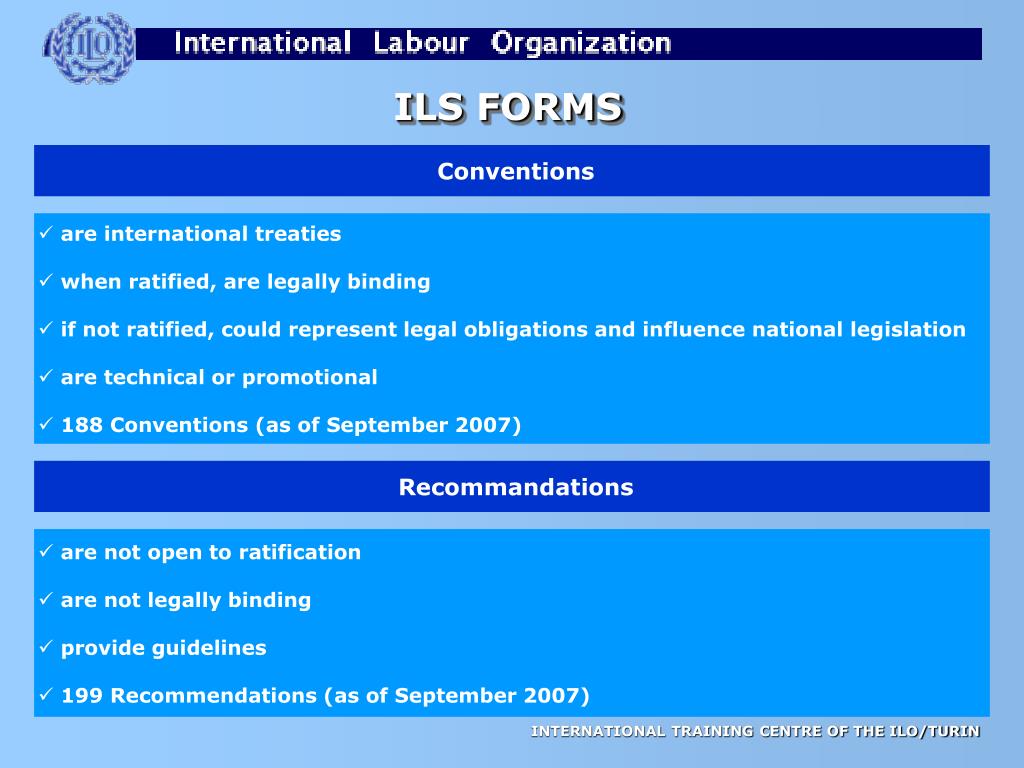
An ILO convention is an international treaty. It sets out standards on a particular subject, such as working hours, occupational safety or freedom of association. A protocol can add to or update a convention. A recommendation provides guidance but is not a treaty and does not require ratification.
Adoption does not automatically make a convention legally binding on every ILO member. Each member must submit an adopted convention to its competent national authority, usually the parliament, for consideration. A country that chooses to ratify it accepts an obligation to apply its provisions and report on how it is doing so.
Key areas covered
ILO conventions cover a wide range of working-life issues, including:
- the right to organise and bargain collectively;
- the abolition of forced labour and child labour;
- equal treatment and non-discrimination at work;
- minimum ages for employment and protections for young workers;
- working conditions, including wages, hours and paid leave;
- occupational safety and health; and
- protection from violence and harassment at work.
Some conventions have particular importance because they address fundamental principles and rights at work. The ILO’s fundamental principles include freedom of association and the effective recognition of collective bargaining, the elimination of forced labour and child labour, the elimination of discrimination in employment, and a safe and healthy working environment.
How conventions are adopted and applied
Conventions are developed through discussion and negotiation among government, employer and worker representatives. They are adopted at the International Labour Conference, normally by a two-thirds majority of the votes cast.
After ratification, a convention’s requirements are put into effect through national laws, regulations, policies and workplace practices. The precise steps depend on the country’s legal system and on the convention itself. Ratification is therefore an important commitment, but effective implementation also requires resources, enforcement and awareness of workers’ and employers’ rights and responsibilities.
Monitoring and accountability
The ILO monitors how ratified conventions are applied. Member states submit reports, and employers’ and workers’ organisations can provide information. The ILO’s Committee of Experts on the Application of Conventions and Recommendations examines this material and may ask governments to clarify or address concerns.
There are also procedures for raising serious issues, including representations and complaints. These processes do not operate like a world labour court, but they provide ways to scrutinise a country’s record and encourage it to meet its commitments.
Why ILO conventions matter
ILO conventions offer governments a shared framework for improving labour law and working conditions. They also give workers and their organisations internationally recognised standards to refer to when advocating for safer workplaces, fair treatment and the right to organise.
Their influence depends on more than the words of a treaty. Ratification, strong national institutions, effective enforcement and informed social dialogue all help turn international standards into practical protections. When these elements work together, ILO conventions can contribute to fairer and safer work across borders.
8 Essential Tips for Understanding International Labour Organization Conventions
- Check whether your country has ratified the convention.
- Ratified conventions create international obligations for member states.
- Read the convention’s full text, not just its summary.
- Distinguish conventions from recommendations, which are generally non-binding.
- Check how the convention is reflected in national law.
- Review ILO guidance on reporting and supervision.
- Consult workers’ and employers’ organisations on implementation.
- Use the ILO’s official database to verify current ratification status.
Check whether your country has ratified the convention.
Before relying on an International Labour Organization convention, check whether your country has ratified it. Ratification means the country has formally agreed to be bound by the convention and is expected to put its requirements into practice. You can search the ILO’s NORMLEX database for your country and the convention concerned; then check how its provisions are reflected in national law, as ratification alone does not show how effectively they are enforced.
Ratified conventions create international obligations for member states.
Once a member state ratifies an International Labour Organization convention, it undertakes an international obligation to apply the convention’s provisions in law and practice. The state must also report on the steps it has taken, allowing the ILO to monitor implementation and identify areas where further action may be needed.
Read the convention’s full text, not just its summary.
Read the convention’s full text, not just its summary. Summaries are useful for a quick overview, but they may leave out important definitions, exceptions, reporting duties or details about how the standards apply. The full text helps you understand exactly what the convention requires and how its provisions relate to workers, employers and governments.
Distinguish conventions from recommendations, which are generally non-binding.
When discussing International Labour Organization standards, it is important to distinguish conventions from recommendations. Conventions are treaties that become legally binding on a country when it ratifies them, while recommendations generally provide non-binding guidance on how labour standards can be developed or applied. A recommendation may accompany a convention, offering practical detail, but it does not itself require ratification.
Check how the convention is reflected in national law.
Check how the convention is reflected in national law: ratification does not always mean that every provision is automatically enforceable in domestic courts. Look for relevant legislation, regulations or official guidance, and check whether national rules have been amended to give effect to the convention. This will help you understand what protections apply in practice, which authority is responsible for enforcing them, and where to seek further advice if rights are not being upheld.
Review ILO guidance on reporting and supervision.
Reviewing the ILO’s guidance on reporting and supervision helps governments, employers and workers understand how international labour standards are monitored in practice. The guidance explains reporting obligations, the information to provide and the role of the ILO’s supervisory bodies in assessing how ratified conventions are applied. It can also help organisations identify gaps, prepare accurate reports and respond constructively to observations or requests for further information.
Consult workers’ and employers’ organisations on implementation.
Consulting workers’ and employers’ organisations is essential when putting International Labour Organization conventions into practice. These organisations understand how laws and policies affect workplaces and can help identify practical challenges, gaps in protection and effective solutions. Meaningful dialogue from the outset can build trust, support compliance and ensure that implementation reflects the needs and experience of those most directly affected.
Use the ILO’s official database to verify current ratification status.
Check the ILO’s official NORMLEX database to verify whether a country has ratified a particular convention and whether that ratification is currently in force. Ratification status can change, and a convention’s adoption does not mean every ILO member is bound by it. NORMLEX also provides details of related protocols, declarations and supervisory comments, helping you confirm the most up-to-date information directly from the source.