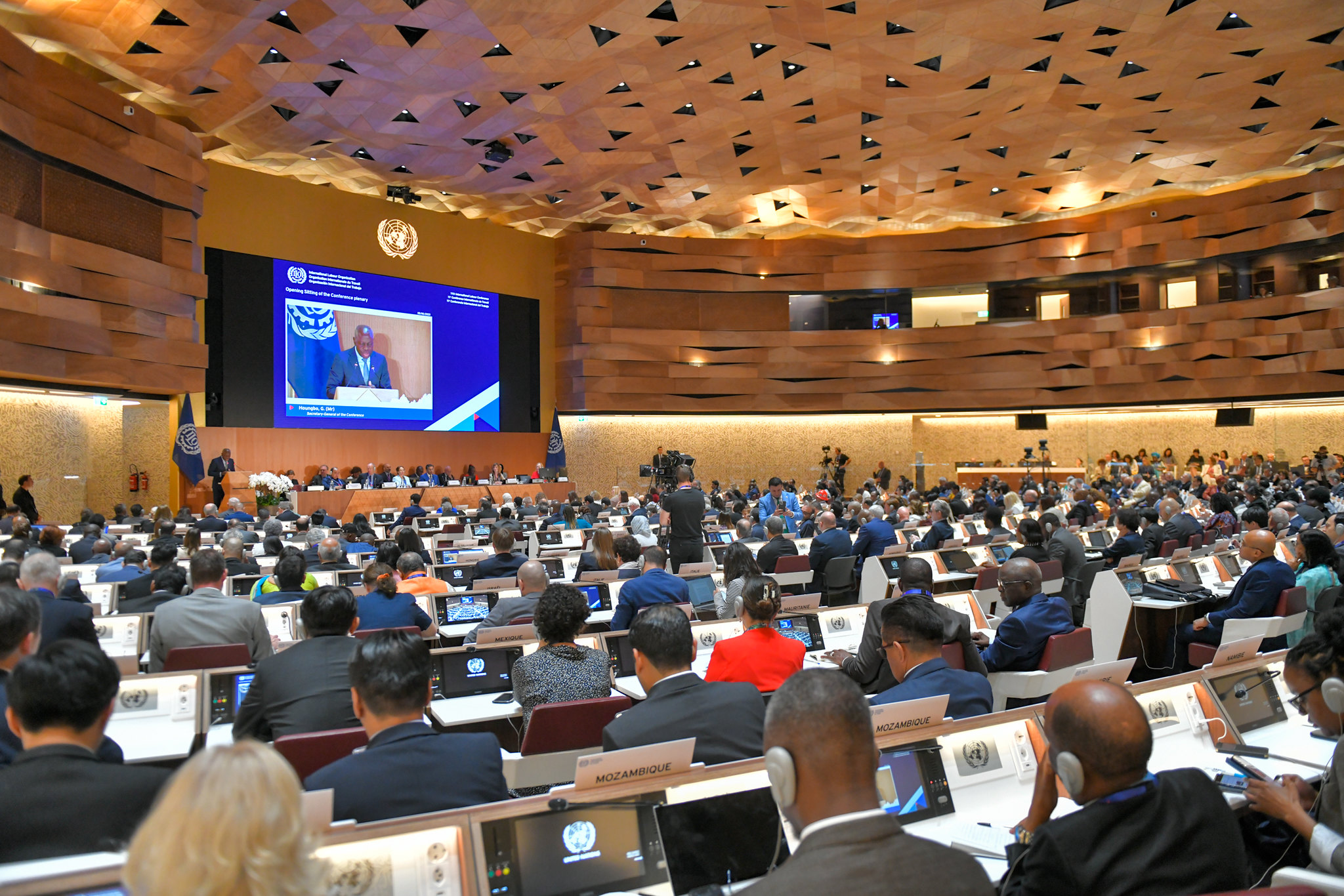
International Labour Conventions: Setting Standards for Work
International labour conventions are agreements that establish standards for workers’ rights and conditions of employment. Developed through international cooperation, they address issues such as forced labour, child labour, discrimination, workplace safety and the right to organise.
The role of the International Labour Organization
The main body responsible for international labour standards is the International Labour Organization (ILO), founded in 1919. It brings together representatives of governments, employers and workers to discuss labour issues and agree on common standards. The ILO became a specialised agency of the United Nations in 1946.
Conventions are adopted at the International Labour Conference, the ILO’s annual gathering. Once a convention is adopted, each member country decides whether to ratify it. Ratification is a formal commitment to apply the convention’s requirements and report on how they are being put into practice.
What conventions cover
ILO conventions cover a wide range of subjects. Some establish basic rights, such as freedom of association and the right to collective bargaining. Others set standards for particular forms of work or address specific risks, including working hours, minimum age for employment and occupational health and safety.
Several conventions are recognised as fundamental because they protect essential principles and rights at work. These include standards concerning forced labour, child labour, discrimination, freedom of association and safe and healthy working conditions.
From international agreement to national law
An international convention does not automatically become part of a country’s domestic law when it is adopted. The process depends on each country’s legal system. After ratification, governments are expected to bring national laws and practices into line with the convention and to provide the ILO with regular reports on its implementation.
The ILO reviews these reports and can draw attention to areas where a country may need to make progress. This system supports accountability and dialogue, although the practical impact of a convention depends on political commitment, effective enforcement and workers’ ability to claim their rights.
Why international labour standards matter
Working conditions differ widely around the world, but problems such as unsafe workplaces, exploitation and discrimination cross national borders. Shared standards help countries work towards common protections and provide a framework for improving labour laws. They can also guide employers, trade unions and organisations advocating for workers.
International labour conventions are not a complete solution to every workplace challenge. Their influence depends on ratification and implementation, and countries may face difficulties in enforcing the rules. Even so, they provide an important foundation for cooperation and for the idea that decent work and fundamental rights should be respected everywhere.
Six Key Benefits of International Labour Conventions
- Promotes fair working conditions.
- Protects workers’ fundamental rights.
- Helps prevent child and forced labour.
- Encourages safer workplaces.
- Supports equality and non-discrimination.
- Sets shared international standards.
Seven Drawbacks of International Labour Conventions
- Ratification can be slow.
- Enforcement may be weak.
- Rules vary in implementation.
- Compliance can be costly.
- Reporting creates extra administration.
- Standards may not suit every local context.
- Workers may see little immediate change.
Promotes fair working conditions.
International labour conventions promote fair working conditions by setting shared standards for issues such as working hours, pay, workplace safety and equal treatment. When countries adopt and enforce these standards, workers are better protected from exploitation and discrimination, while employers have clearer expectations to follow. This helps support safer, fairer workplaces across different countries and industries.
Protects workers’ fundamental rights.
International labour conventions help protect workers’ fundamental rights by setting shared standards for fair and safe working conditions. They address issues such as forced and child labour, discrimination, freedom of association and the right to organise. When countries ratify and enforce these conventions, workers gain stronger legal protections and clearer ways to challenge exploitation and unfair treatment.
Helps prevent child and forced labour.
International labour conventions help prevent child and forced labour by setting clear standards that countries commit to uphold. They support laws and measures to protect children from harmful or exploitative work and ensure that employment is freely chosen, without threats, coercion or deception. By encouraging governments to strengthen protections and report on their progress, these conventions also promote accountability and cooperation across borders.
Encourages safer workplaces.
International labour conventions encourage safer workplaces by setting shared standards for health and safety at work. They guide countries in creating laws and policies to reduce hazards, prevent accidents and protect workers from occupational illness. By promoting training, risk assessments and effective safety measures, these conventions help make workplace wellbeing a recognised responsibility for governments and employers.
Supports equality and non-discrimination.
International labour conventions support equality and non-discrimination by setting shared standards that protect workers from unfair treatment. They promote equal opportunities and fair conditions regardless of characteristics such as sex, race, religion or national origin. By encouraging governments to strengthen laws and workplace protections, these conventions help create more inclusive workplaces where people can access employment, training and advancement on an equal basis.
Sets shared international standards.
International labour conventions set shared standards that help countries establish common expectations for workers’ rights and working conditions. By agreeing on principles such as fair treatment, safe workplaces and protection from exploitation, nations can work towards more consistent labour protections, while giving governments, employers and workers a clear framework for improving national laws and practices.
Ratification can be slow.
Ratifying an international labour convention can be a slow process. Governments may need to consult employers and workers, review existing laws and secure parliamentary approval before committing to its requirements. Political changes or competing priorities can add further delays, meaning that workers may wait years for stronger protections to take effect.
Enforcement may be weak.
One drawback of international labour conventions is that enforcement may be weak. Although countries that ratify a convention are expected to follow its standards, monitoring often relies on governments reporting their own progress, and international bodies may have limited powers to compel compliance. As a result, labour protections can remain poorly enforced in practice, particularly where oversight is limited or political commitment is lacking.
Rules vary in implementation.
One drawback of international labour conventions is that their rules can be implemented differently from one country to another. Differences in national laws, resources and enforcement mean that workers may not receive the same level of protection, even where countries have agreed to common standards. As a result, the effectiveness of a convention often depends on each government’s commitment and ability to put its requirements into practice.
Compliance can be costly.
Complying with international labour conventions can be costly, particularly for small businesses and countries with limited resources. Meeting requirements may involve upgrading equipment, improving workplace safety, increasing wages or investing in inspections, training and record-keeping. Although these changes can bring long-term benefits for workers and productivity, the initial expense may place pressure on employers and public budgets.
Reporting creates extra administration.
Reporting requirements under international labour conventions can create additional administrative work for governments, employers and other organisations. Gathering reliable information, preparing reports and responding to reviews takes time and resources, which may be challenging for countries or workplaces with limited staff and capacity.
Standards may not suit every local context.
International labour conventions set shared standards, but a single approach may not suit every country or local context. Differences in economic development, labour markets, legal systems and social practices can make some requirements difficult to apply in the same way everywhere. If standards are adopted without enough flexibility or consultation with local workers and employers, they may be hard to enforce or less effective in addressing the problems they were intended to solve.
Workers may see little immediate change.
One drawback of international labour conventions is that workers may see little immediate change after a convention is adopted or ratified. Governments often need time to update laws, establish enforcement systems and ensure employers comply. Where inspections are limited or workers have little access to advice and representation, improved rights may exist on paper without making a noticeable difference in daily working life.