The Farseer Trilogy: A Journey into Robin Hobb’s Realm
Robin Hobb’s Farseer Trilogy is a landmark of modern fantasy: an intimate, richly imagined story of royal politics, loyalty and the cost of belonging. Told by FitzChivalry Farseer, a royal bastard raised at the court of the Six Duchies, the trilogy follows his transformation from an unwanted child into a trained assassin—and a figure whose choices shape the fate of a kingdom.
The three books
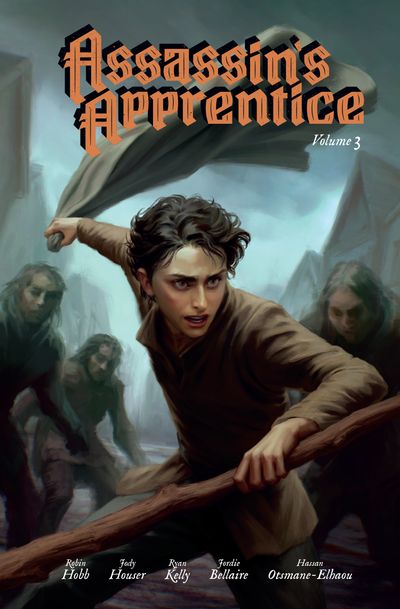
- Assassin’s Apprentice (1995) introduces Fitz, who is brought to Buckkeep Castle as a boy and drawn into the Farseer royal household. He receives training from the mysterious Chade, while discovering two forms of magic: the Skill, a mental art associated with the royal line, and the Wit, a connection with animals that is feared and condemned.
- Royal Assassin (1996) deepens the political and personal tensions surrounding the throne. As the kingdom faces growing threats, Fitz is caught between duty to the crown and the relationships that give his life meaning.
- Assassin’s Quest (1997) takes Fitz beyond the familiar world of Buckkeep. His journey becomes a search for survival, purpose and a way to confront the forces endangering the Six Duchies.
A different kind of hero
Fitz is not a conventional fantasy hero. He is observant, resourceful and deeply loyal, but also vulnerable to loneliness, self-doubt and the consequences of decisions made under pressure. The story is told in his own voice, giving the reader access to his memories and reflections as well as the events themselves. This perspective makes the trilogy feel personal: grand political struggles are experienced through the life of one complicated, often isolated young man.
Hobb’s focus on character does not come at the expense of world-building. The Six Duchies has its own history, customs and rivalries, while the people within it are shaped by class, family and political obligation. Magic is woven into daily life and social attitudes rather than treated simply as a tool for spectacular battles.
Duty, identity and belonging
At the heart of the trilogy are questions about who gets to define a person’s identity, and what it means to be loyal. Fitz is bound to the royal family by blood, yet his status leaves him on the margins of court life. His relationships—with the young prince Verity, the Fool, his mentor Chade and others—offer different kinds of companionship and obligation. The bonds he forms are as important to the story as its intrigue and danger.
The trilogy also explores the uneasy relationship between power and sacrifice. Serving the crown brings Fitz purpose, but it can demand that he suppress his own needs. Hobb treats these costs with patience and emotional depth, allowing the consequences of events to linger rather than quickly moving on to the next adventure.
Where to begin
The Farseer Trilogy is the opening sequence in Robin Hobb’s larger Realm of the Elderlings series. Its story has a satisfying arc, while also introducing a world that continues across further connected trilogies. New readers should start with Assassin’s Apprentice and follow the publication order to experience Fitz’s story as it unfolds.
For readers who enjoy character-driven fantasy, intricate court politics and a narrator whose inner life matters as much as the wider conflict, the Farseer Trilogy remains a compelling place to begin. Its greatest strength is the way it makes the fate of a kingdom feel inseparable from the struggles of one person trying to find where he belongs.
8 Essential Tips for Navigating the Intricacies of the Farseer Trilogy
- Read the books in order
- Give the story time to build; it favours character over constant action.
- Pay attention to Fitz’s inner thoughts—they shape much of the plot.
- Notice how loyalty and duty pull characters in different directions.
- Keep track of the characters’ names, titles and relationships.
- The first-person narration is limited to Fitz’s perspective.
- Expect emotional consequences rather than neat, easy victories.
- If you enjoy the trilogy, explore Robin Hobb’s wider Realm of the Elderlings books.
Read the books in order
Read the Farseer Trilogy in order, beginning with Assassin’s Apprentice, followed by Royal Assassin and Assassin’s Quest. Fitz’s story develops steadily across all three books, with relationships, political events and earlier choices carrying over from one volume to the next. Reading them in sequence helps you follow the story’s emotional journey and understand the world as Robin Hobb gradually reveals it.
Give the story time to build; it favours character over constant action.
Give the story time to build: the Farseer Trilogy favours character development, relationships and political intrigue over constant action. Robin Hobb lets events unfold gradually, giving Fitz’s choices and their consequences room to resonate. Settle into the pace, and the quieter moments can prove just as rewarding as the dramatic ones.
Pay attention to Fitz’s inner thoughts—they shape much of the plot.
Pay close attention to Fitz’s inner thoughts as you read: his doubts, memories and interpretations shape not only how events are told, but also the choices he makes and the direction of the plot. The gap between what Fitz thinks and what he says or does can be just as revealing as the action itself, offering a deeper understanding of his relationships, loyalties and growing sense of identity.
Notice how loyalty and duty pull characters in different directions.
Notice how loyalty and duty pull the characters in different directions throughout the Farseer Trilogy. Fitz’s devotion to the royal family often conflicts with his personal needs, while other characters must weigh their promises against love, ambition and the good of the Six Duchies. These competing obligations give the story much of its emotional depth, making each choice—and its consequences—feel significant.
Keep track of the characters’ names, titles and relationships.
The Farseer Trilogy features a large cast of characters, many of whom are known by different names or titles as their roles and relationships change. Keeping a note of who is related to whom, who serves the royal family and how each character is connected to Fitz can make the court politics easier to follow. A simple character list is especially useful early in the series, as it helps you stay immersed in the story without having to stop and search back through the books.
The first-person narration is limited to Fitz’s perspective.
The first-person narration keeps the reader closely tied to Fitz’s perspective, revealing events only as he understands or remembers them. This creates an intimate portrait of his thoughts and feelings, while leaving other characters’ motives and important developments uncertain. As a result, readers discover the world and its mysteries alongside Fitz, though his assumptions and blind spots can shape how events are interpreted.
Expect emotional consequences rather than neat, easy victories.
In the Farseer Trilogy, victories rarely come without a cost. Fitz’s choices leave lasting marks on his relationships, his sense of self and his future, so don’t expect every conflict to end neatly or every sacrifice to be quickly forgotten. Robin Hobb gives emotional consequences room to unfold, making the triumphs feel hard-won—and the losses all the more powerful.
If you enjoy the trilogy, explore Robin Hobb’s wider Realm of the Elderlings books.
If you enjoy the Farseer Trilogy, explore Robin Hobb’s wider Realm of the Elderlings books. The series continues through several connected trilogies, expanding the world and introducing new characters while revisiting some familiar faces. Reading in publication order is a rewarding way to follow its evolving story and discover how the different threads connect.