Samuel Beckett Books: A Guide to His Novels, Plays and Prose
Samuel Beckett is one of the most influential writers of the twentieth century. Best known for his play Waiting for Godot, he also produced a remarkable body of novels, short prose and poetry. His writing can be comic, unsettling and deeply moving, often finding humour in loneliness, uncertainty and the struggle to carry on.
Beckett wrote in both English and French, and translated many of his works between the two languages. The versions are not always identical, so readers may notice differences in wording, rhythm or emphasis. Whether you are discovering him for the first time or looking to explore beyond his most famous play, his books offer several ways into his distinctive literary world.
Where to start with Samuel Beckett
A good first choice depends on the kind of reading you enjoy. For a novel, try Murphy, which combines dark humour with philosophical reflection. For a concentrated encounter with Beckett’s experimental style, begin with Molloy. Readers interested in drama can start with Waiting for Godot, while those looking for shorter, later prose might choose Company.
Beckett’s major novels
Murphy
Published in 1938, Murphy follows a man who seeks solitude and freedom from ordinary life. Its comic, sometimes absurd events introduce themes that recur throughout Beckett’s work: the body, the mind, isolation and the difficulty of making sense of existence.
Watt
Written during the Second World War and published in 1953, Watt is an eccentric and formally inventive novel. Its characters try to understand a world that resists explanation. Beckett’s precise, repetitive language turns that struggle into both a source of comedy and a measure of unease.
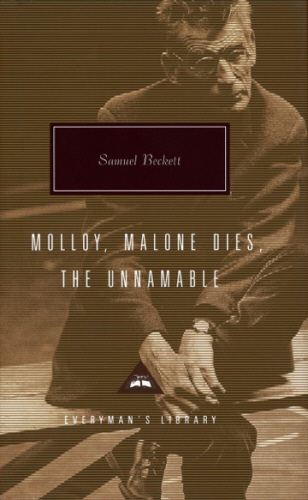
The Trilogy: Molloy, Malone Dies and The Unnamable
Beckett’s best-known sequence of novels begins with Molloy (1951), continues with Malone Dies (1951) and concludes with The Unnamable (1953). The books move away from conventional plot and towards narrators whose identities, memories and accounts of events become increasingly uncertain.
The Trilogy is demanding, but it is also central to understanding Beckett as a novelist. Across its three books, the act of telling a story becomes as important as the story itself. The narrators persist in speaking, even as language and certainty begin to fail them.
How It Is
First published in French in 1961 and later translated into English by Beckett, How It Is is among his most challenging novels. Its fragmented narration and stark images create an intense reading experience, continuing his exploration of voice, memory and endurance.
Samuel Beckett’s plays
Although Beckett is often discussed as a novelist, his plays are essential to his work. Waiting for Godot centres on two men waiting for someone who may never arrive. Its spare setting and repeated conversations invite questions about hope, friendship and the passage of time.
Other important plays include Endgame, a bleak and darkly comic drama about a small group of people trapped in a confined world; Krapp’s Last Tape, in which an older man listens to recordings of his younger self; and Happy Days, which follows a woman speaking cheerfully despite increasingly difficult circumstances.
Beckett’s plays often use simple settings and sparse dialogue, but their meanings remain open. They can be funny and disturbing at the same time, and their silences are often as significant as their words.
Shorter prose and later works
Beckett continued to experiment with shorter forms throughout his career. Texts for Nothing consists of brief, unsettled pieces concerned with voice and existence. Later works such as Company, Ill Seen Ill Said and Worstward Ho are spare and compressed, testing how much can be expressed through a small number of words.
These books can be a rewarding next step after the novels or plays. They show Beckett refining his style towards greater brevity, while returning to familiar concerns: who is speaking, what can be remembered and whether language can offer any certainty.
Why read Samuel Beckett today?
Beckett’s books do not offer easy answers, and they rarely follow conventional storytelling rules. Their lasting power comes partly from the way they combine formal experimentation with recognisable human experiences: loneliness, frustration, affection, fear and the need to continue.
Beckett received the Nobel Prize in Literature in 1969. His work remains a major influence on theatre and modern literature, but it need not be approached as a puzzle with one correct solution. Read at your own pace, his books reward attention to their humour, rhythm and striking images as much as to their ideas.
Frequently asked questions
What is Samuel Beckett’s most famous book?
Beckett is best known for the play Waiting for Godot. Among his novels, the Trilogy—Molloy, Malone Dies and The Unnamable—is often regarded as his most significant achievement.
Which Samuel Beckett book should I read first?
For an accessible introduction to his theatre, start with Waiting for Godot. If you prefer fiction, Murphy offers more conventional storytelling than many of his later novels. Molloy is a strong choice for readers ready to explore his more experimental writing.
Did Samuel Beckett write in English or French?
He wrote in both languages. Beckett often translated his own work, adapting it in the process, so English and French editions can differ in small but meaningful ways.
Exploring Samuel Beckett: A Guide to His Trilogy, Best Works, and Reading Order
- What is the order of the Beckett trilogy?
- Which Samuel Beckett book should I read first?
- Where to start with Samuel Beckett?
- What is Samuel Beckett’s best work?
- What book did Samuel Beckett win the Nobel Prize for?
- What was Samuel Beckett famous for?
What is the order of the Beckett trilogy?
The Beckett trilogy is made up of Molloy, followed by Malone Dies, and then The Unnamable. First published in French between 1951 and 1953, the novels move from more recognisable storytelling towards increasingly fragmented narration, though each can also be read on its own.
Which Samuel Beckett book should I read first?
If you’re new to Samuel Beckett, Waiting for Godot is a good place to start: it’s his best-known work, and its short, spare scenes introduce his dark humour and themes of waiting and uncertainty. If you’d prefer a novel, try Murphy, which has a more conventional narrative, or choose Molloy if you’re ready for a more experimental read.
Where to start with Samuel Beckett?
A good place to start with Samuel Beckett is Waiting for Godot, his best-known play, which introduces his dark humour and themes of waiting, friendship and uncertainty. If you would rather begin with a novel, try Murphy for a more conventional narrative, or Molloy for a first taste of his more experimental style. Shorter works such as Krapp’s Last Tape are also a rewarding introduction.
What is Samuel Beckett’s best work?
There is no single agreed answer to what Samuel Beckett’s best work is, but Waiting for Godot is often considered his defining achievement and remains the most widely known. Readers drawn to his fiction may prefer the Trilogy—Molloy, Malone Dies and The Unnamable—which showcases his bold, increasingly experimental style. The best place to start depends on whether you prefer theatre or prose, and whether you enjoy open-ended, challenging writing.
What book did Samuel Beckett win the Nobel Prize for?
Samuel Beckett did not win the Nobel Prize in Literature for a single book. He was awarded the prize in 1969 for his body of work, which the Swedish Academy praised for expressing the “destitution of modern man” through new forms in the novel and drama. His celebrated works include Waiting for Godot and the Trilogy of novels: Molloy, Malone Dies and The Unnamable.
What was Samuel Beckett famous for?
Samuel Beckett was famous for his influential plays, novels and experimental prose, which explore themes of loneliness, uncertainty and the persistence of human life. He is best known for the play Waiting for Godot, a landmark of modern theatre, and for his novel trilogy: Molloy, Malone Dies and The Unnamable. Beckett wrote in both English and French and was awarded the Nobel Prize in Literature in 1969.